
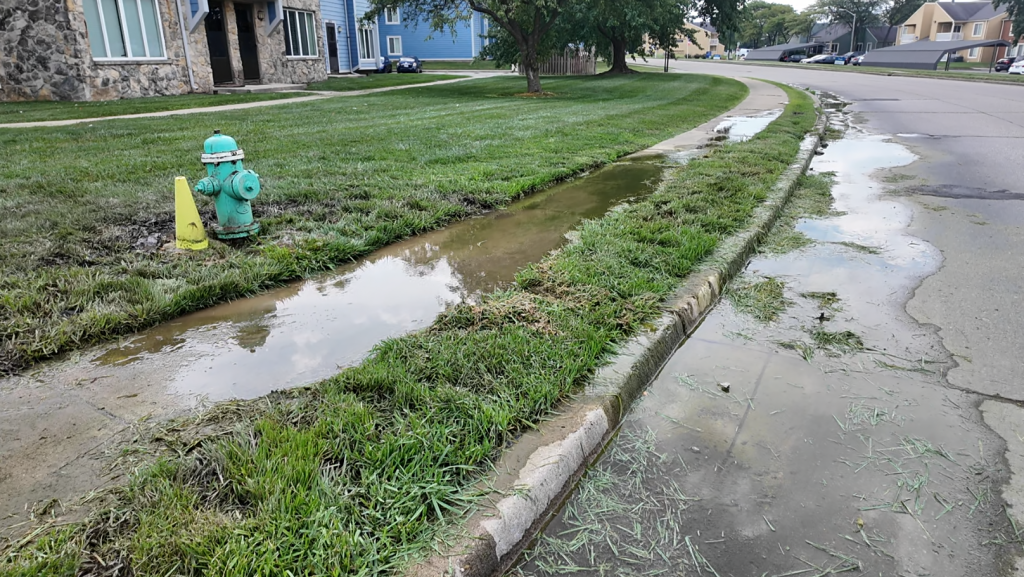
INDIANAPOLIS (WISH) — Indiana’s I-Team is digging into concerns about leaking and broken fire hydrants following a tip we received from a Citizens Energy customer.
A woman named Mary, who lives in an apartment complex on Clearvista Parkway, contacted Kara Kenney with Indiana’s I-Team saying a fire hydrant has been leaking since at least December 2025.
“Look at this leak,” Mary said in a video submitted to Indiana’s I-Team. “Look how far the water is running. This has been going on since before December 2025 and it gets bad in the wintertime and freezes up.”
Mary’s video showed the leaking water spilling onto the sidewalk, the street, and creating a muddy mess.

When Mary, a Citizens Energy Group customer, contacted Indiana’s I-Team she said she and other neighbors have called Citizens Energy but the utility did not fix the hydrant issue.
Mary is concerned about wasted water, the mess and if fire crews will be able to use the fire hydrant.
“It’s unacceptable,” said Mary.
Indiana’s I-Team contacted Citizens Energy Group, which owns and maintains more than 42,000 hydrants in Central Indiana.
A map is available here [media.graphassets.com].)
Some hydrants date back to the late 1800s, according to Citizens Energy Group.
In 2011, Citizens Energy Group acquired the City of Indianapolis water system.
But, Citizens Energy Group is not a government entity, it is a public trust with no shareholders.
When you pay your water bill, a portion goes to keep hydrants in working order.
Within hours of Indiana’s I-Team contacting Citizens Energy Group, a crew arrived and found the hydrant itself is working.
“We were able to go out that day and make sure that is fully operable,” said Ben Easley, a spokesperson for Citizens Energy Group. “It would work in the case of a fire truck needing to use it to fight a fire.
The problem is a leaking pipe, said Easley.
“Water pipes underneath the ground are the responsibility of Citizens Energy Group,” said Easley. “The leak detention team is addressing it.”

However, fixing the leak was not prioritized because the fire hydrant was working.
“Our records show that we received recent calls about this hydrant back in December 2025 and January 2026,” said Easley in an email to Indiana’s I-Team. “On each occasion, a crew responded within the day and found that the hydrant was operational. The small leak in the infrastructure supporting the hydrant was also noted for further maintenance. While that leak could not be prioritized at the time, the crews who inspected regularly affirmed that the hydrant itself was fully operational for use in the case of fire protection.”
Days after we met with Citizens Energy Group, another crew showed up to not only fix the leaking pipe on Clearvista Parkway, but also to replace the hydrant.
“After nine months, Citizens finally got out here,” Mary said in a video message. “The leak is finally fixed. This area now has a safe fire hydrant. Couldn’t have done it without you, Kara Thanks so much.”
Citizens Energy Group says it was more cost effective to replace the entire fire hydrant and valve apparatus attached to the main water line rather than just fix it.
Citizens Energy typically finds out about broken fire hydrants from regular inspections and maintenance, and to a lesser extent, from fire departments and inquiries from citizens.
You can report damage to a fire hydrant at 317-924-3311.
At any given time, .1% or about 40 hydrants are out of service. Citizens Energy completes approximately 2,500 repairs every year.
“We would ask folks to get in touch with Citizens Energy Group. Fire safety is obviously a priority for us, and we will make it a priority to inspect that hydrant and the infrastructure around it to make sure that it’s all operating.”
Indiana’s I-Team also checked with fire departments across Marion County and they told us if a hydrant is broken, firefighters are trained to look for the next closest— which is usually every 500 feet.
About The Author

You may also like
-
Fever take down Sky 113-90, set franchise record with 18 made threes
-
Wrong-way crash on I-65 kills 2 adults and 1-year-old boy, alcohol ‘likely played a role’
-
Man killed, another hospitalized in Indianapolis double shooting
-
Indianapolis Department of Public Works executes full-day flood recovery effort
-
Indianapolis Public Works plans convoy for all-day flood debris removal