Worldwide

Smart Farming Is Not the Future. It Is Already Here

ROME, June 30 (IPS) – Farmers today are producing food under pressures that would have been unimaginable to previous generations. Input costs are rising and supply chains are unreliable. Water is scarcer. Weather is less predictable. And for a growing number of farmers — in Sudan, in Ukraine, in Myanmar, in Gaza — the challenge is producing food at all, in the middle of active conflict. These are not marginal conditions. They describe the reality facing hundreds of millions of people who grow the food the world depends on.

Read the full story, “Smart Farming Is Not the Future. It Is Already Here”, on globalissues.org

Xenophobia Won’t Bring Wealth – Only Misery – To South African’s Too

JOHANNESBURG, South Africa, June 30 (IPS) – Usually, the fiesta to celebrate St Antony at the church with the same name in Crown Mines, Johannesburg, is a lively affair. The church is usually packed with congregants from the Portuguese community, including recent migrants from Mozambique and Angola.

Read the full story, “Xenophobia Won’t Bring Wealth – Only Misery – To South African’s Too”, on globalissues.org

Building Peace Infrastructures: African Leaders Reflect on the Peacebuilding Architecture Review

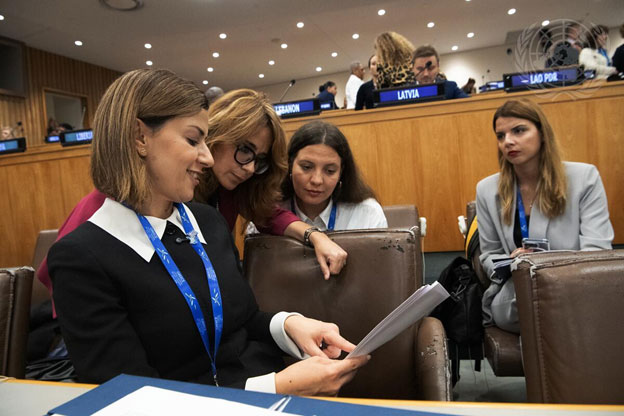
UNITED NATIONS, June 30 (IPS) – As the United Nations held its first-ever Peacebuilding Week (June 22-26) UN officials and developmental partners gathered at Egypt’s Permanent Mission on June 23 to hold a dialogue on the main question which emerged from the 2025 Peacebuilding Architecture Review (PBAR): “how can global commitments to peacebuilding translate into tangible results on the ground?”

Read the full story, “Building Peace Infrastructures: African Leaders Reflect on the Peacebuilding Architecture Review”, on globalissues.org

Universities Join Hands to Enhance Agroforestry Research for Mitigating Climate Change

NAIROBI, June 29 (IPS) – A team of universities, led by Addis Ababa University, has joined forces to implement a four-year Intra-Africa academic mobility project aimed at strengthening agroforestry research and education for climate change mitigation.

Read the full story, “Universities Join Hands to Enhance Agroforestry Research for Mitigating Climate Change”, on globalissues.org

GHANA: ‘This Is Bigger than Lgbtqi+ Rights – It’s about the Kind of Society We Want to Be’

CIVICUS discusses Ghana’s anti-LGBTQI+ law with Leila Lariba, Executive Director of One Love Sisters Ghana, a community-driven organisation that advances human rights, social inclusion and wellbeing for Muslim LGBTQI+ people in Ghana.

Read the full story, “GHANA: ‘This Is Bigger than Lgbtqi+ Rights – It’s about the Kind of Society We Want to Be’”, on globalissues.org

The Forgotten Triumph of Rinderpest Eradication, and the Cost of Ignoring Its Lesson

BRUSSELS, Belgium, June 27 (IPS) – Animal disease is no longer a distant concern for farmers and veterinarians alone. It is increasingly visible in household budgets: global egg prices surged more than 60% during recent bird flu outbreaks. In South Africa, foot-and-mouth disease pushed beef prices up by 34%. These are not isolated fluctuations in price. They are reminders that when prevention falls short, families, farmers and food systems all pay the price.

Read the full story, “The Forgotten Triumph of Rinderpest Eradication, and the Cost of Ignoring Its Lesson”, on globalissues.org

AI Will Destabilize Jobs, the Middle Class and the Welfare State Unless We Act in Time

NEW YORK, June 26 (IPS) – Artificial intelligence (AI) promises remarkable gains in productivity, science, medicine and education. But it is also poised to wipe out millions of jobs, hollow out the middle class, and drain the tax revenues that pay for hospitals, schools and pensions. The process has already begun, and the time to act is running out.

Read the full story, “AI Will Destabilize Jobs, the Middle Class and the Welfare State Unless We Act in Time”, on globalissues.org

Colombia’s next President: A Reckoning for Peace, Climate and Human Rights

MONTEVIDEO, Uruguay, June 26 (IPS) – On 21 June Colombians made their choice. By the narrowest of margins, Abelardo de la Espriella, a far-right criminal lawyer who’s never held elected office, became president-elect. Climate activists, human rights defenders, Indigenous communities and peace advocates have the most to lose from the incoming government’s agenda.

Read the full story, “Colombia’s next President: A Reckoning for Peace, Climate and Human Rights”, on globalissues.org