


Blog

Grand jury indicts 35-year-old man in 2006 Franklin murders case

FRANKLIN, Ind. — A Johnson County grand jury has indicted a 35-year-old Franklin man on two counts of murder for the 2006 deaths of a 10-year-old boy and his stepmother.

Police took Michael Jerome James into custody following the indictment, which came after a three-week review of evidence and testimony. The charges relate to the deaths of Chynna Dickus, 26, and her stepson Blake Dickus. Family members found the two stabbed to death inside their Franklin home on July 24, 2006.

Franklin Police Chief Kirby Cochran said in a news release issued Friday afternoon that the department never forgot the two and never stopped seeking justice. He credited the investigations division and detectives for keeping the case active for 20 years. Cochran said the indictment happened due to new leads, and advances in forensic science, although new details were provided.

Detective Sgt. John Borges said in the release that investigators learned nearly 11 years ago that the deaths were linked to a string of five burglaries in Franklin. The daytime burglaries happened in June 2006 and July 2006 within a half-mile of the Dickus home on Aberdeen Drive. One burglary happened on the same day and street as the murders.

In each of those cases, the intruder cut window screens in a T-pattern to enter the homes. “The screen was cut in a T pattern, sliced over and sliced down to where it laid open to where somebody could actually crawl through a window,” Borges said.

Borges said the burglaries also shared another unusual detail: The intruder ransacked the homes and went through the refrigerators.

Johnson County Prosecutor Lance D. Hamner said in a separate news release late Friday afternoon that the crime happened during his first term as prosecutor and has remained with him since. The Republican said his desire to seek justice for the Dickuses was the primary reason he left his position as a judge in 2022 to run for prosecutor again. He was the county prosecutor from 1991 to 2009.

The indictment followed a renewed push on Sept. 25, when the prosecutor’s office asked to increase the reward for information from $25,000 to $100,000. Hamner said the incentive aimed to encourage people who remained silent to finally speak up.

Officials said an initial hearing will happen in Johnson Circuit Court, although online court records on Friday night did not yet show a case filed against James.

Cat food investigation finds heavy metals, pesticides and plastic chemicals

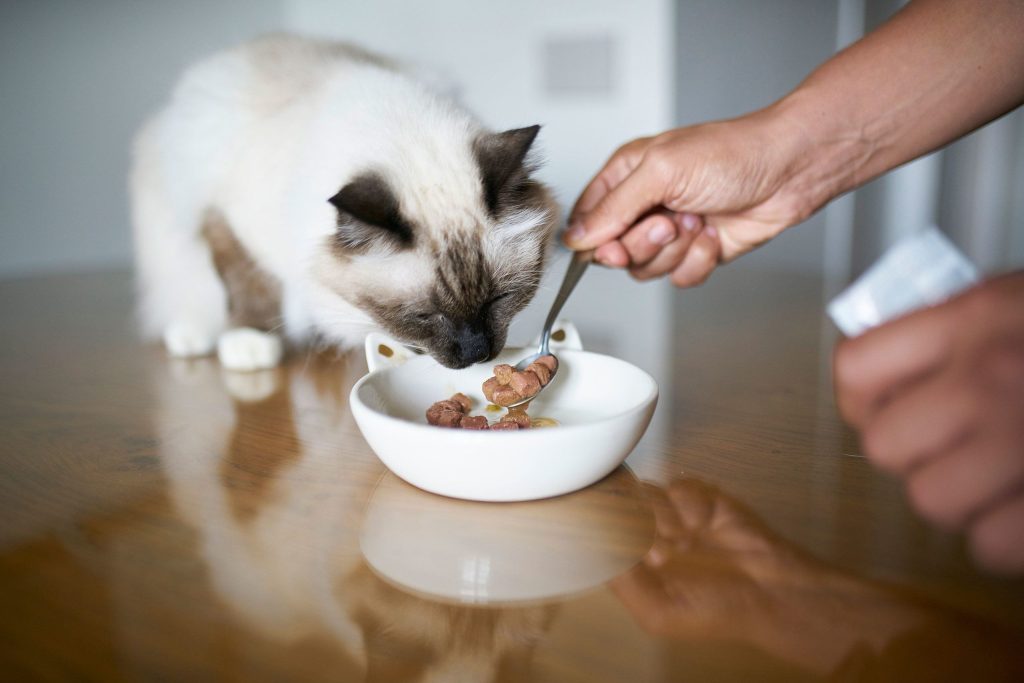
(CNN) — Nearly all tested cat foods contain toxic plastic contaminants, the herbicide glyphosate and heavy metals such as lead, mercury and arsenic, according to a new investigation provided exclusively to CNN.

“Most cats eat the same foods nearly every day, with little variation,” said report author Molly Hamilton, executive director of the Clean Label Project, a Colorado nonprofit that tests consumer products for contaminants and certifies those meeting its standards.

“The contaminants are an ongoing exposure that may accumulate in cats’ bodies over their lifetimes,” Hamilton said. “For example, chronic kidney disease is among the most common causes of death in older cats — the kidneys play a major role in filtering heavy metals.”

Toxins were found in all types of cat food — wet, dry and air- or freeze-dried — even in products labeled as natural and nutritionally superior, according to the analysis released Friday.

“Cat owners increasingly choose premium meats, organic vegetables and cleaner labels, assuming higher prices and quality ingredients mean healthier food,” Hamilton told CNN. “That’s not necessarily the case.”

Clean Label published a similar assessment of dog food in February that found three to 13 times more heavy metals than human food. Lead and cadmium exposure has been linked to canine cancer, a leading cause of death in dogs.

Heavy metals occur naturally in soil, water and air, but agricultural, industrial and mining pollution can increase and spread contamination. Plastics and other contaminants may also enter food during manufacturing, the report said.

“Overall, this appears to be a reasonably conducted analysis,” said Ryan Babadi, science director for Toxic Free Future, a nonprofit consumer product safety organization.

“Major retailers have the responsibility to require their suppliers to eliminate harmful chemicals from pet food and packaging — chemicals that are already being phased out or banned in many other products,” said Babadi, who was not involved in the investigation.

The Pet Food Institute, which represents manufacturers of cat foods, told CNN in an email that pet food manufacturers do implement comprehensive food safety and quality assurance programs.

Those include “ingredient specifications, supplier verification, testing protocols, traceability systems, and science-based preventive controls designed to ensure products are safe, nutritious, and consistent,” said Elise Fennig, the CEO for the Pet Food Institute.

“Cat owners should feel confident that the food they feed their pets is safe and produced according to rigorous regulatory and quality standards.”

Lead found in 99% of all samples

The investigation tested 100 top-selling cat foods for more than 122 contaminants, including lead, arsenic, cadmium, mercury, pesticides, herbicides and phthalates, the plastic chemicals linked to an increased risk of death in humans.

Lead was found in 99%, cadmium in 96% and arsenic in 94% of cat food samples across 62 brands. Contamination varied by product type — wet, dry, and air- or freeze-dried — and the type of protein, such as poultry, beef or fish.

Cadmium is classified as a human carcinogen and harms the kidneys and bones. A buildup of lead in the body damages nearly every major organ system. Inorganic arsenic — the type found in soil and water — is also a known human carcinogen.

Dry cat food contained roughly three times more lead than wet or air-dried products. No level of lead is safe for people, and children are most vulnerable: Their bodies absorb up to 50% of ingested lead, compared with about 10% for adults, which can cause stunted growth, decreased IQ, hyperactivity and irritability.

Cats and other small pets also absorb more than larger ones, yet few regulations control contaminants in pet food, Hamilton said. “The absence of safety standards does not mean a contaminant is safe. Most guidelines are designed for farm animals, not kittens or 15-year-old housecats.”

Fish and seafood — popular proteins for cats — had the strongest association with mercury and cadmium, the report found. Because microorganisms in water turn regular mercury into methylmercury, a toxic chemical form that binds tightly to fish tissue, the heavy metal accumulates to higher levels in aquatic animals.

Mercury is toxic to the nervous, digestive and immune systems, as well as the kidneys, lungs and skin, according to the World Health Organization.

Mercury levels were about 18 times higher and cadmium levels about 2.5 times higher in fish- or seafood-based cat foods than in foods made with other proteins. Wet versions of seafood products contained the most mercury — nearly 28 times as much as wet foods made with other meats, especially poultry.

“As the main protein, chicken was better when it came to mercury and cadmium, but we saw higher rates of lead and herbicides in chicken,” Hamilton said. “It’s a whack-a-mole situation — which contaminant do you want to whack?

“That doesn’t mean all fish options were high in mercury — levels depend on manufacturers’ quality-control testing,” she added. “We certified several fish-based foods.”

Nearly 85% of poultry-based foods met Clean Label Project’s purity standard compared with 25.7% of fish and seafood products.

“Every product in this study was purchased at retail, and no brand had any role in selecting products, conducting testing or analyzing the results. No brand saw the results before publication,” Hamilton said.

Glyphosate and phthalates

Although cats are carnivores, many manufacturers add produce to cat food for its antioxidants, minerals and vitamins. Unless grown organically, those plants may be exposed to pesticides. A national report found the vast majority of 100 popular fruits and vegetables tested positive for a wide variety of bug-killers.

The Clean Label investigation tested for glyphosate, which is agriculture’s most widely used herbicide. Glyphosate was found at detectable levels in 37% of products, and cat food with more plants in the first 10 ingredients had higher glyphosate levels.

The WHO’s International Agency for Research on Cancer classified glyphosate in 2015 as “probably carcinogenic to humans.” The US Environmental Protection Agency disagrees.

“On average, cat food with two plant ingredients among the top 10 on the label had roughly 40% more glyphosate than a similar food with one plant ingredient. Cat food with five plant ingredients had nearly four times as much,” Hamilton said.

Another “very concerning finding” was the widespread presence of di(2-ethylhexyl) phthalate, or DEHP, a chemical used in PVC plastics and some food-contact materials that is linked to cancer, birth defects and other health concerns, Babadi said.

“It was detected in about half of the products tested, with the highest levels in canned and pouch products. DEHP contamination could potentially occur during food processing, including through contact with PVC tubing or other farm or food processing equipment,” he said.

“It is encouraging to see those harmful bisphenols, including BPA, were found less frequently, suggesting pet food can be produced and packaged without these endocrine disrupting chemicals,” Badadi added.

The research did have limitations. Each product was tested from a single batch. Therefore the study could not capture differences that might occur between batches of the same product.

“Brands that routinely screen for contaminants of concern tend to have more consistent results over time,” Hamilton said. “In addition, this study compares contaminant levels across products in each category of wet, dry and air- or freeze-dried. It does not determine whether a specific product will cause harm to a cat.”

What pet owners can do

If your cat favors seafood, vary its diet with chicken or other proteins to limit daily exposure to mercury and cadmium. Read the ingredient list carefully, however, as cat foods without fish in their name may still contain seafood ingredients and thus higher levels of mercury and cadmium.

According to the Clean Label report, wet or air-dried products are preferable to dry food for lower lead exposure, while avoiding foods with plants in the top 10 ingredients may lower pesticide exposure.

In addition, don’t rely on the first listed ingredient to gauge toxins. In more than a third of tested products, it didn’t tell the full story, Hamilton said.

“The first ingredient on a food label is often the biggest selling point because ingredients are listed by weight,” she said. “We tested and found the first ingredient is not always a reliable indicator of what the food contains, nor does it predict which contaminant may be present at the highest levels.”

One reason: Manufacturers need not disclose which part of a fish or other protein they use, Hamilton said. Wild salmon, for example, may sound healthier, but its liver, kidneys, intestines, head and skin store more chemical pollutants than the rest of the fish.

“Yet you have no idea what part of the fish is in that cat food,” Hamilton said. “The best way to know what’s in your cat’s food is to contact the manufacturer and determine if they test the food – and how frequently they test.

“Because even if they were to tell you what part of the fish that they’re using, without testing, there’s no way to know how free of contaminants it really is.”

It’s also a good idea for consumers to reach out to the company making their cat’s favorite food brand and inquire about testing and quality control standards, experts say.

“Pet owners should take action and urge brands and retailers to ensure toxic chemicals and plastics are not hiding in cat food and its packaging,” Babadi said. “Pets, as part of our families, deserve food that is safe from toxic chemicals.”

A cold front brings rain, falling temperatures Friday | Oct. 2 , 2026

Marcus’ 4 a.m. Friday forecast


INDIANAPOLIS (WISH) — A cold front is working through central Indiana this morning, shutting down rain chances and ushering in a much cooler, fall-like feel.

This morning:

Rain is sticking around through the morning commute, tapering off from northwest to southeast. Look for lingering showers through late morning before pushing out by midday.

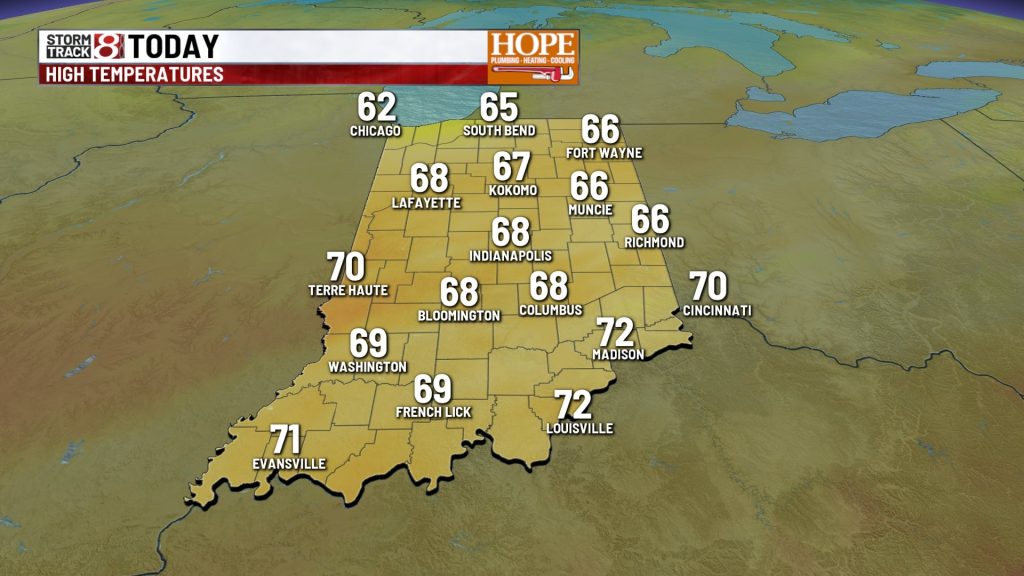
Highs will struggle to reach the upper 50s to near 60°—a noticeable drop from yesterday. Skies will remain mostly cloudy through the afternoon hours.

Tonight:

Skies clear out late with temperatures dropping through the 40s statewide. By Saturday morning, look for lows in the lower to mid 40s.

Weekend forecast:

Cooler temps on tap for the morning hours both Saturday and Sunday morning, but you can’t complain about the perfect afternoon temperatures. Highs around 70° on Saturday, and topping out around the mid 70s Sunday.

First frost potential:

The main story we’re tracking: the potential for the first patchy frost of the season late Monday night into Tuesday morning. The Muncie and Anderson area in central Indiana, along with northeastern Indiana is most likely to see temperatures dip into the mid/upper 30s. If winds go calm as expected—and they should—frost development is likely.

Looking ahead:

After the chilly start to the week, a warming trend slides in by Wednesday. Southwesterly flow will push temperatures back toward or slightly above seasonal normals.

7-day forecast:

Aces eliminate Fever in WNBA Playoffs for second straight year

LAS VEGAS — The Indiana Fever’s playoff run came to an end Thursday night in a loss to Las Vegas.

The Aces won 94-83 in the decisive Game 3 of the best-of-three series. The Aces also knocked out the Fever in last year’s WNBA playoffs.

Aces center A’ja Wilson led all scorers with 36 points. She also had 10 rebounds.

Guard Kelsey Mitchell led the Fever with 23 points.

Indiana center Aliyah Boston added 19 points and 10 rebounds, while Fever guard Caitlin Clark finished with 18 points.

Indiana led by as many as eight points in Game 3.

Last year, the Aces eliminated the Fever in the semifinal round of the playoffs.

The Aces will play the winner of the Golden State-Dallas series in the semifinal round of the 2026 playoffs.

Aces lead Fever at halftime of decisive Game 3 playoff matchup

LAS VEGAS (WISH) — The Indiana Fever trail at halftime of Thursday night’s Game 3 matchup against the Aces.

The Aces lead 54-48 with just two quarters left to play.

Indiana and Las Vegas were tied 31-31 after the first quarter.

Las Vegas center A’ja Wilson leads all scorers with 21 points.

Indiana guard Caitlin Clark leads the Fever with 13 points.

Fever center Aliyah Boston has 11 points and 7 rebounds, while Fever guard Kelsey Mitchell has added 10 points.

The winner of Thursday’s game advances to the second round of the WNBA Playoffs. The two teams split the previous two games in the best-of-three first round series.

Monroe County elementary students admit making social media threats

BLOOMINGTON, Ind. — Two Highland Park Elementary School students admitted to sending social media threats that prompted a sheriff’s investigation this week.

The Monroe County Sheriff’s Office received information about the threats involving three students Monday at the at the Monroe County Community School Corp. facility. Deputies immediately began an investigation.

During the search for answers, investigators identified two juvenile suspects. The sheriff’s office will not release names or identifying information because the individuals involved are minors.

Authorities sent the case to juvenile probation officers and filed a report with the Indiana Department of Child Services.

Gov. Braun’s diesel order could save farmers thousands of dollars

Farmers say Indiana diesel order could save thousands of dollars

DANVILLE, Ind. — A corn and soybean farmer said Thursday morning at his Hendricks County farm that Gov. Mike Braun’s order to allow the on-road use of dyed diesel arrived just in time for the most energy-intensive season.

David Hardin grows corn and soybeans on about 2,000 acres near Danville. He expects to use several thousand gallons of off-road diesel, on-road diesel, and gasoline this month as he harvests crops and hauls them to market. This is the most fuel he will use all year for his three grain-hauling tractor-trailers.

Hardin bought a fuel contract in January to lock in prices, which was before the war with Iran began. That contract expired this summer. Since then, price spikes from the war prevented him from securing new contracts, forcing him to buy fuel at market prices.

“The rising diesel costs have added several thousand dollars to our costs, ones that we definitely didn’t have budgeted for, but there is no alternative for using diesel fuel in our equipment,” Hardin said. “We’re just fortunate that we’re able to get the fuel and we’ll have to figure out how to stomach the price.”

Indiana typically charges a 63-cent-per-gallon special fuel tax on diesel. This tax is separate from the state’s gas tax holiday. However, the state exempts diesel used for commercial vehicles that stay off the road, such as farm or construction equipment. This “dyed diesel” is chemically identical to regular diesel but contains red dye so inspectors can identify unauthorized use.

Braun issued an order Wednesday in Indianapolis to allow farmers to use off-road diesel in on-road trucks through Nov. 4. Hardin estimates the order could save him as much as $1,500 a week.

“I know that doesn’t sound like much, but in farming, every penny counts,” Hardin said.

Courtney Kingery, CEO of the Indiana Corn Marketing Council, Indiana Corn Growers Association, and Indiana Soybean Alliance, expects most farms to save between $1,000 and $2,000 this month. She said diesel is vital for transporting products, which is where the savings will happen. There are about 20,000 corn and soybean farms in Indiana; 95% of them are family-owned.

“This announcement could not have come at a better time to relieve a little bit of those costs to Hoosier farmers,” Kingery said.

The governor’s order expires Nov. 4, coinciding with the end of the gas tax holiday. Kingery said a wet spring means the harvest likely will happen after that date, and she hopes Braun extends the order.

The Indiana State Police enforces laws regarding off-road diesel. A state police spokesperson said troopers are determining how to handle enforcement during this period.

Categories