
Families said Indiana kicked them off health insurance
INDIANAPOLIS (WISH) — Some Indiana families with disabled children said they are being kicked off their health insurance through Medicaid.
Several mothers contacted Kara Kenney with Indiana’s I-Team.
Parents of kids with disabilities rely heavily on Medicaid and its Home and Community Based Services waivers. These programs help fund critical therapies like speech, occupational, physical and behavioral.
Ruth Hevelone lives in Kokomo. She’s a mother to twin boys with autism.
Her son Sammy waited three years to get on the Medicaid wavier, and when he did, it was a game changer.
“My son sees nine different specialists,” Hevelone said. “He has more than autism, way more going on. He gets 40 hours of therapy a week. That’s paid for by this waiver.”
The waiver also allows Ruth’s husband to be a full-time home health aide to the children.
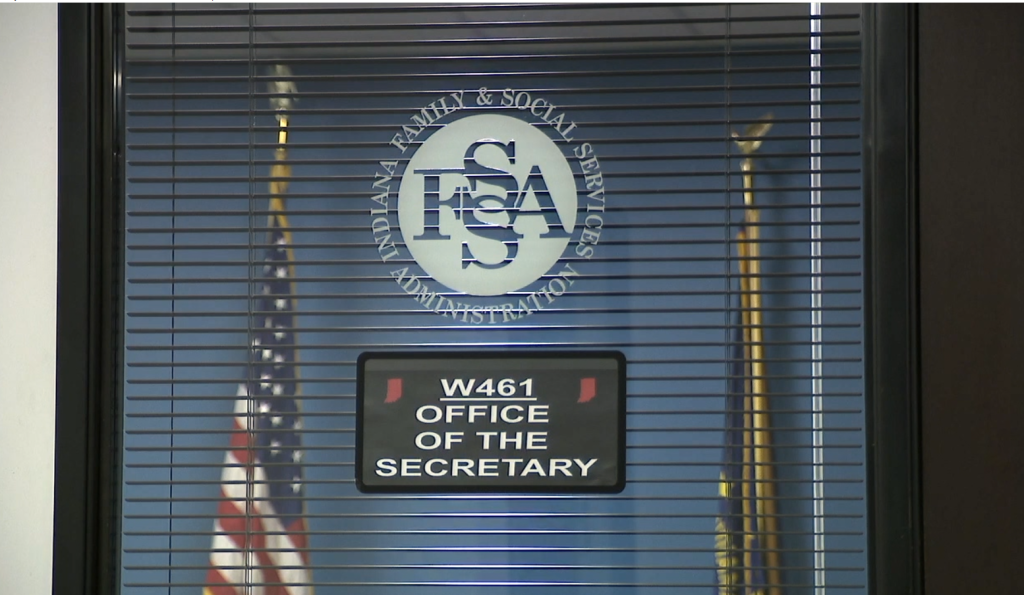
On June 1, the family was notified by the Indiana Family and Social Services Administration (FSSA) that Sammy was kicked off Medicaid, which also impacted his waiver.
“It’s just devastating,” said Hevelone. “I was in a panic, a state of complete panic.”
If a child is under 18 with a waiver, Medicaid only looks at the child’s income and assets.
Ruth says earlier this year, they wrote FSSA a letter stating their income was waived. Yet months later, FSSA told them they also needed proof of the entire family’s income and assets, which Ruth provided.
“You have to turn in everything: your mortgage, 30 days bank statements, 30 days pay stubs, everything,” said Hevelone.
When they went to the FSSA office, it didn’t help, Ruth said.
“They said that the paperwork we turned in on May 22 was still sitting on someone’s task list to process, and therefore, because it was never processed it was canceled,” said Hevelone.
Something similar happened to Trisha Norfleet. She also lives in Kokomo and has two sons with autism.
“We have been struggling so hard to get our boys back on Medicaid,” said Norfleet. “They are both on the waiver. We are beside ourselves.”
Trisha said the state kicked her son off Medicaid, saying she did not meet the income requirements, something she said doesn’t make any sense because parental income is usually disregarded with the waiver.
“We just want to get our kids back on their insurance,” said Norfleet. “I don’t have the words to describe how much our youngest son needs these therapies. They are literally life changing for him.”
Indiana’s I-Team sent both Trisha Norfleet and Ruth Hevelone’s stories to FSSA, but the agency told us they can’t comment on individual cases due to privacy reasons.
FSSA said it is collecting parental income in case of future changes, but emphasized it is not currently being used to determine eligibility.
“On the best days, it’s confusing,” said Karly Sciortino-Poulter, director of the Arc Advocacy Network. “One of the things I’m seeing is paperwork errors.”
The Arc of Indiana is an organization that advocates for families with disabilities.
“I have seen this problem has certainly escalated in the last two years,” said Sciortino-Poulter. “I have probably consulted on or worked on more Medicaid appeals in the last two years than I have in the 10 years before combined. So, we’re having more problems right now.”
Sciortino-Poulter said in some cases, people are getting cut off because they never got a letter from FSSA asking for certain in the first place. She’s also seeing processing issues at FSSA.
“It’s an automated situation, and because their paperwork hasn’t been processed and been uploaded into the computer system, the computer system turns it off, and then it’s harder to get back on,” said Sciortino-Poulter.
Willl Colteryahn worked for FSSA for 12 years. He said a new assessment tool is leading to more denials.
“That assessment tool they say is scientifically proven to do a better job at determining the person’s level of care,” said Colteryahn.
Under the old assessment system, FSSA’s denial rate for Medicaid waivers was .02% and it’s currently at 6%, according to FSSA.
FSSA provided the following statement to Indiana’s I-Team:
“The Bureau of Disability Services (BDS) has not changed eligibility criteria for Indiana’s waiver programs. What has changed is the assessment process we use to evaluate those criteria. The new process is more accurate, more consistent, and better aligned with federal requirements and long‑standing program expectations.
Despite misinformation circulating publicly, eligibility determinations are made by trained human professionals, not by artificial intelligence or machine learning. No AI system is making decisions about whether an individual qualifies for services.
Historically, Indiana’s waiver program issued very few denials of any kind. This led to situations where individuals remained on the waiver for many years—even when their level of need no longer met the federal standard. The program has always required periodic reviews to confirm that individuals continue to meet eligibility criteria, and we are now ensuring those reviews occur as intended.
Importantly, eligibility standards have not changed. The improved assessment process simply provides a more accurate picture of an individual’s current needs. While the updated process has resulted in some changes in outcomes, those outcomes reflect long‑standing federal requirements that Indiana is obligated to follow.
We understand the concerns raised and are carefully reviewing each case to ensure decisions are correct, consistent, and fair. FSSA remains committed to supporting Hoosiers with disabilities and ensuring that waiver services are available to those who meet the eligibility criteria.”
– Marcus J Barlow, Deputy Chief of Staff and Director of the Office of Strategic Communications and Public Affairs.
Will Colteryahn is now running for state representative in the hopes of helping families.
“I believe the solution is we need to invest in services,” said Colteryahn.
He helped Ruth Hevelone resolve her son’s Medicaid issue.
“If it took a single email to get her son re-enrolled in a matter of hours, that proves to me that cut was arbitrary and should have never happened in the first place,” said Colteryahn.
Ruth Hevelone says her husband still lost several months of income because of the lapse.
“We only started getting his income back yesterday,” said Hevelone. “They need to figure out how they are not going to cut off services for people of disabled children. That is an absolute.”
About The Author

You may also like
-
Family of man killed in IMPD shooting demands release of bodycam video
-
Teenager among 2 injured in shooting at Lebanon home
-
Colts’ Cam Taylor-Britt suspended for Week 1 after violating NFL’s Personal Conduct Policy
-
Carmel police shoot and injure man on US 31
-
Sheep wander highway following multi-vehicle crash on I-465