
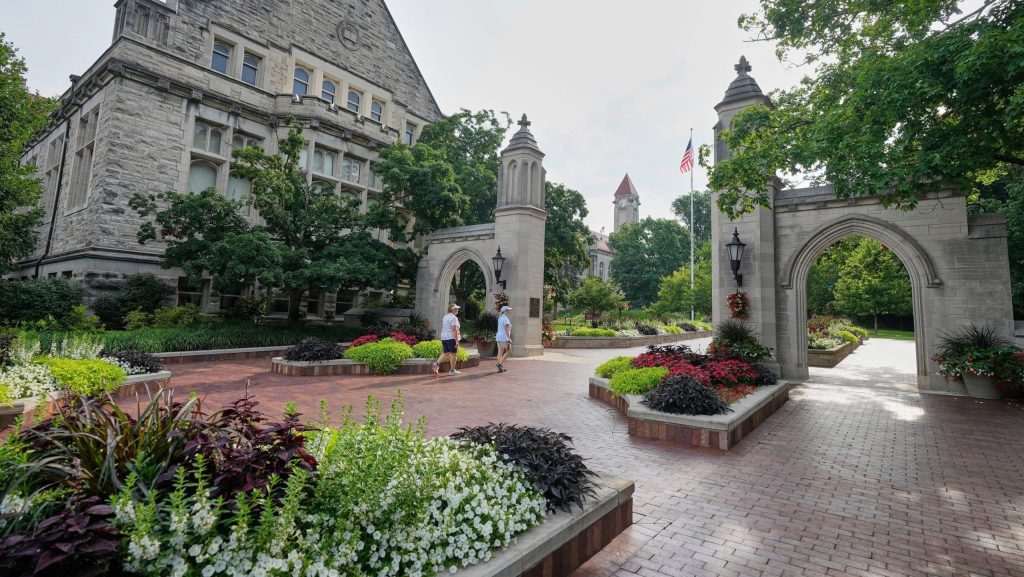
State eliminates or consolidates hundreds of degrees
INDIANAPOLIS (WISH) — Hundreds of college degrees will be either wound down or folded into other programs following a Wednesday vote by the Commission for Higher Education.
The vote follows months of negotiations between the commission and the state’s seven public colleges and universities: Ball State University, Indiana State University, IU, Ivy Tech, Purdue University, the University of Southern Indiana and Vincennes University. After state lawmakers last year mandated colleges target degrees with very low enrollments, education officials said they and their counterparts at the public institutions identified 1,160 degree programs that, combined, accounted for just 4% of all of Indiana’s college degrees awarded in 2024.
Out of that total, about 470 degree programs will continue, either because they are new programs that are still ramping up or because the universities have submitted a plan to improve student enrollments. Another 370 will be consolidated or merged with another program. Finally, 171 degree programs will be suspended and 39 will be eliminated. A total of 50 programs slated to be suspended or eliminated have no students enrolled in them at all this year. Just 0.6% of Indiana’s 2024 public college graduates held degrees that are slated to be either suspended or eliminated.
Dr. Matt Butler, the commission’s chief academic officer, said the commission has always had the authority to approve new degree programs or review existing ones, but the enabling state law merely authorized program reviews. It did not require them. That changed with a new law that passed last year. It requires the commission to review the enrollments of college degree programs over a three-year rolling average.
“Many of (the programs) have very few students enrolled and they’ve been struggling to produce graduates over the last few years and they likely will struggle to produce future students,” he said. “We all know students have been voting with their feet since the Great Recession from certain disciplinary fields to more direct-preparation fields.”
At IU Bloomington, for example, commission documents show 28 degree programs will be either suspended or eliminated. Seven of them have averaged no completions at all over the past three academic years and most of the rest averaged less than one per year. Degree programs to be suspended or eliminated across all seven institutions run the gamut. They include Bachelor of Arts degrees in Religious Studies, Geography and Africana Studies at IU Indianapolis; Master of Arts degrees in History and Journalism at Ball State; Bachelor of Science degrees in Physics, Quantitative Economics and Unmanned Systems at Indiana State; and Ph.Ds in Veterinary Medicine and Consumer Science at Purdue’s main campus in West Lafayette.
Secretary of Education Dr. Katie Jenner said any students who are enrolled in a program slated to be merged, consolidated or eliminated will be allowed to complete their degree. This includes incoming freshmen who had enrolled in those programs for the 2026-2027 academic year. Those programs will stop accepting new applicants as they wind down.
Jenner said unused or underused degree programs divert resources that could be used to help students elsewhere. She said she epxects university leaders will look for ways to use the savings from eliminated programs.
“I think it will depend on university to university on what they decide to do, but that will absolutely be a focus for our university teams to make sure we’re as efficient as possible and have the greatest value proposition in Indiana,” she said.
Roughly half of the degree programs with enrollments below the minimum threshold set by state law are at IU, a total of 605 across all campuses. Purdue is second, with 274 such degree programs. Ivy Tech had the fewest, with 47 programs flagged for review.
Jenner said the law makes degree reviews based on enrollments an annual requirement, but she does not expect future reviews to result in such large-scale eliminations because the initial work will be done.
About The Author

You may also like
-
IMPD nabs 18 in near north side drug investigation
-
Wind advisory issued for central Indiana with gusts up to 50 MPH | Apr. 2, 2026
-
Trump speaks about war with Iran amid rising oil prices
-
4 astronauts rocket into space in first trip to the moon in more than 53 years
-
Sam’s Club is raising its membership prices in May