Latest

Purdue names retired Air Force Lt. Gen. Jay B. Silveria as its 14th president

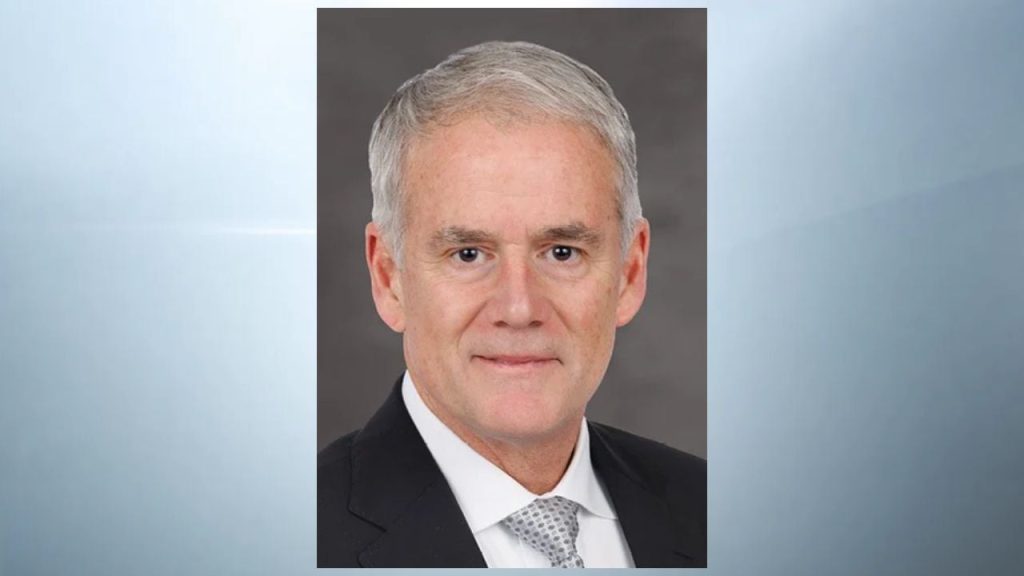
WEST LAFAYETTE, Ind. — Purdue University’s Board of Trustees unanimously elected University of Arkansas System President Jay B. Silveria as the university’s 14th president Thursday. Silveria will succeed Mitch Daniels on Feb. 1, 2027. Daniels has served as interim president since July.

Silveria, a retired Air Force lieutenant general, has led the University of Arkansas System since January 2025. He previously served as associate vice president and executive director of Texas A&M University and the Bush School of Government and Public Service in Washington from 2020 to 2024. He was superintendent of the U.S. Air Force Academy from 2017 to 2020.

“I am honored to become the next president of Purdue University, one of the top public research universities in the country,” Silveria said. “While I am familiar with Purdue’s worldwide reputation for affordability and accessibility, ingenuity and integrity, I look forward to meeting the people who make this place so special and to listen and learn about its culture.

“As Indiana’s land-grant research university, Purdue has a responsibility to pursue academic excellence while using its knowledge, research and graduates to advance the state and serve society. I look forward to meeting that responsibility by supporting outstanding faculty, staff and researchers; helping students succeed; mobilizing resources; building partnerships; and connecting institutional goals and outcomes to public value.

“I am excited for the opportunity to meet and work alongside faculty, students, staff, alumni, industry collaborators and the people of Indiana.”

Purdue Board of Trustees Chair Gary Lehman said Silveria’s career shows a commitment to preparing people and organizations for consequential work.

“Jay’s career reflects a consistent commitment to preparing people and organizations to accomplish consequential missions. His strength is in the combination of his experiences, rather than any single position. This combination brings us a leader who has operated in environments that require disciplined execution, developed future leaders, built an educational enterprise in an urban setting and taken responsibility for a broad public higher-education mission. The board is excited to welcome Jay as Purdue’s next president, and we look forward to working with him to advance our mission,” Lehman said.

The University of Arkansas System enrolls more than 80,000 students and employs more than 30,000 people. It includes a flagship land-grant research university, a medical sciences campus, regional universities, community colleges, a law school, and agricultural and other public-service divisions. Silveria’s work required him to understand the institutions’ different missions while advancing shared goals. The system’s strategic priorities include access, student success, innovation and discovery, responsible stewardship, statewide responsiveness and collaboration.

“The University of Arkansas System’s mission explicitly connects education, scholarship and service with the economic, health and cultural advancement of Arkansas. Its agricultural and extension work reaches communities across the state,” Silveria said. “Purdue’s land-grant mission similarly connects education and research with public engagement and the needs of Indiana. The common principle is that a public university’s value is measured not only by its academic reputation but also by what its knowledge and graduates contribute to society.”

At Texas A&M, Silveria was tasked with launching a graduate-school enterprise in Washington. The work required coordination among academic leaders, faculty, administrators, students and outside partners. The Bush School connects students with institutions, practitioners and policy debates relevant to their studies, the university said.

As superintendent of the Air Force Academy, Silveria led an institution whose mission includes academics, military preparation, athletics and character development. Purdue said that experience gave him a foundation for understanding how universities can align their culture, resources and programs around student development and prepare graduates to contribute to society.

During his military career, Silveria served as deputy commander of the Combined Air Force Component at U.S. Central Command in Southwest Asia. He oversaw command and control of air operations across a 20-nation area. Operations Resolute Support in Afghanistan and Inherent Resolve in Iraq and Syria took place under his command.

He also commanded the U.S. Air Force Warfare Center at Nellis Air Force Base in Nevada and served as vice commander of the 14th Air Force at Vandenberg Air Force Base in California. He was director of security assistance at the Office of Security Cooperation in Baghdad, Iraq. Silveria also commanded a fighter wing, an air operations center and a fighter squadron. His military decorations include the Distinguished Service Medal, a Bronze Star and multiple Air Medals.

Silveria grew up in an Air Force family and graduated from the U.S. Air Force Academy in 1985. He completed undergraduate pilot training in 1986. He is a command pilot with more than 3,900 hours flying T-37, T-38, F-15C/E, HH-60 and F-35A aircraft. He has flown combat missions over the Balkans and Iraq.

He earned a master’s degree in social science from Syracuse University and master’s degrees from Air University at Maxwell Air Force Base in Alabama and the National War College at Fort Lesley J. McNair in Washington.

Purdue is a research university ranked among the nation’s top 10 public universities, according to the university. More than 111,000 students attend Purdue across its campuses, including more than 57,000 at its main campuses in West Lafayette and Indianapolis. Purdue said its main campus has frozen tuition for 14 consecutive years, supporting its commitment to affordability and accessibility and allowing more students to graduate debt-free.

Braun: About 240 Indiana children waiting for adoptive homes

INDIANAPOLIS— About 240 children in Indiana’s foster care system are waiting for adoptive homes, with older children, sibling groups and those with more complex needs often facing longer waits for permanent placement.

The average age of children waiting for adoption is 12 to 13 years old, according to the Indiana Department of Child Services.

November is National Adoption Month, an opportunity to highlight the need for permanent, loving homes for children in foster care and encourage more families to consider adoption.

“As an adoptive parent, I know how special this month is,” DCS Director Jennifer Dorfmeyer said. “At DCS, we are committed to making sure every child in Indiana thrives in a safe, loving, forever home.”

DCS plans to share resources and information throughout the month to help prospective adoptive families better understand the process and prepare to welcome a child into their home.

“Creating a family through adoption is a life-changing act that has a lasting impact on the kids who are adopted, the families they become a part of and the communities they join,” Gov. Mike Braun said.

Braun signed a proclamation recognizing November as Adoption Month in Indiana during a ceremony at the Statehouse Thursday. The Carman family, whose family was created through adoption, attended the signing along with state officials.

DCS encourages families who can provide supportive and loving homes to consider adoption, particularly for older children and sibling groups who may spend more time waiting for placement.

Convicted child killer Jeffrey Weisheit dead after lethal injection

Convicted child killer Jeffrey Weisheit dead after lethal injection

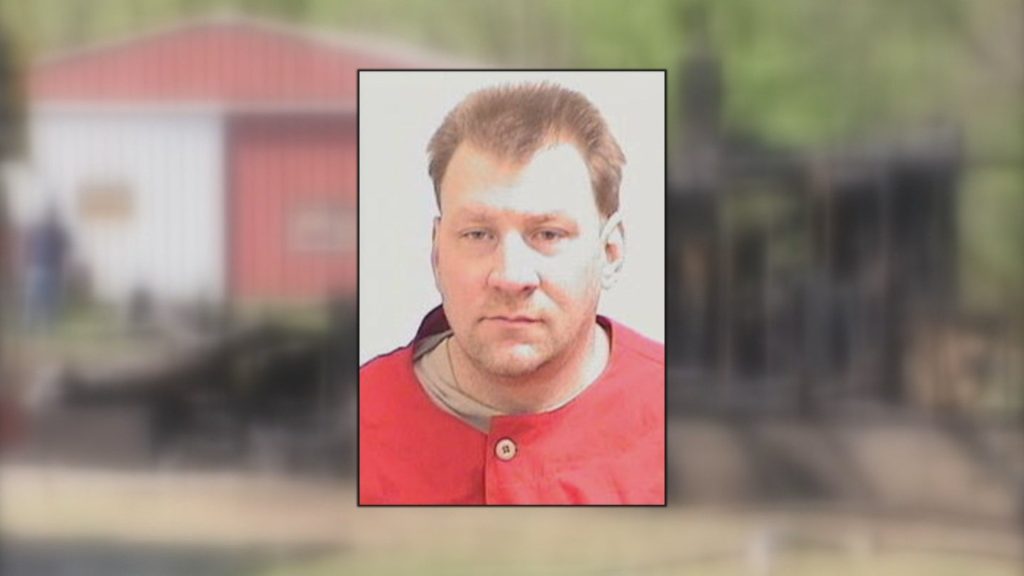
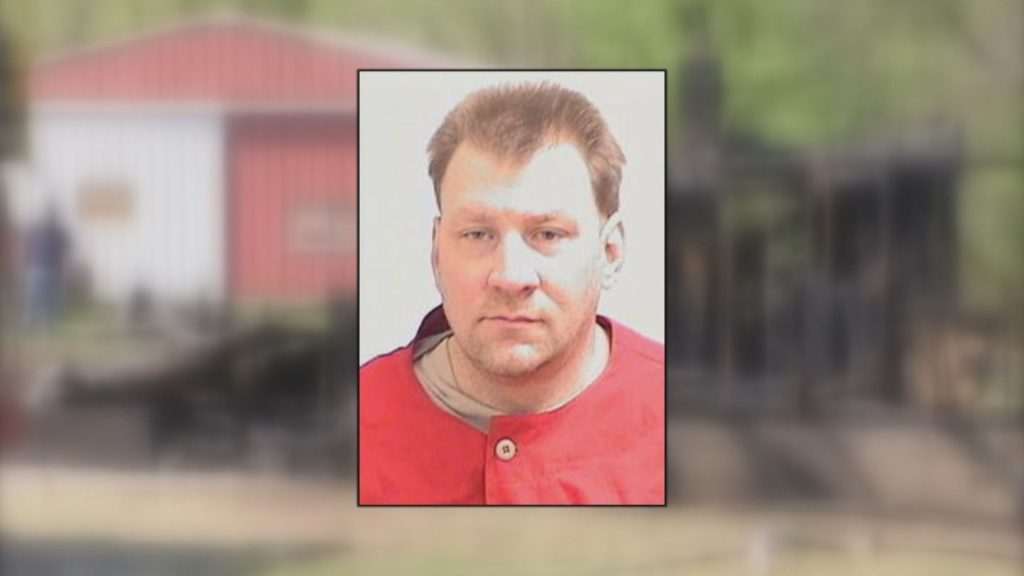
MICHIGAN CITY, Ind. (WISH) — Indiana death row inmate Jeffrey Weisheit died by lethal injection inside the Indiana State Prison at 12:45 am CST, Thursday Nov. 5, more than 15 years after he murdered 8-year-old Alyssa Lynch and 5-year-old Caleb Lynch in a Vanderburgh County arson. 

Weisheit had no final words according to the Indiana Department of Correction (IDOC). 

It was the fourth execution in Indiana over the last two years but the first since the failed execution of Christa Pike in Tennessee. 

IDOC Communications Director Noelle Russell said the execution happened without incident. “I am told he did not move at all.”

Weisheit’s attorney Joe Perkovich, who witnessed the execution, said Weisheit was “unresponsive” but the procedure was largely obscured, no one declared a time of death, and there was no way to tell if there were complications. 

“I don’t know what I saw,” Perkovich said.

In 2010, investigators say Weisheit duct taped Caleb Lynch and stuffed a rag in the boy’s mouth before igniting road flares in the child’s clothes. The fire killed Caleb and his sister, Alyssa. Both were the children of Lisa Lynch, Weisheit’s girlfriend, who was at work at the time. 

“Those who commit the most heinous crimes against the most vulnerable will be held fully accountable under Indiana law,” Republican Attorney General Todd Rokita said in a statement. “My thoughts and prayers remain with the families of Alyssa and Caleb. Nothing can ever bring their children back, and the pain of this loss will never fully leave them. Yet, hopefully, with this justice being done, they may find some measure of peace.”

In Weisheit’s request for clemency, attorneys claimed severe mental illness and brain trauma contributed to his crimes. The Indiana Attorney General’s Office argued those explanations had already been litigated. 

Lisa Lynch tearfully asked the Indiana Parole Board to recommend Weisheit’s death sentence be carried out during an Oct. 19 clemency hearing. 

“Nothing about an abuser’s twisted narrative changes the horror of what was done,” Lynch said.

The children’s father signed an affidavit in support of clemency, writing “Jeffrey, I forgive you.” 

Ultimately, Republican Gov. Mike Braun followed the Parole Board recommendation to not grant clemency.

“Jeffrey Weisheit’s case has been heard and reviewed numerous times by both state and federal courts, including the Indiana Supreme Court, since his conviction in 2013,” Gov. Braun said in a statement. “These reviews have never resulted in an overturned sentence.  The State Parole Board issued a unanimous recommendation to deny Weisheit’s final appeal for clemency and that his execution proceed as scheduled. Today, Weisheit’s sentence has been carried out as ordered by the court.” 

Weisheit’s attorneys believe the state purchased the lethal injection drugs from a pharmacy currently under a state investigation. They filed an emergency motion to delay the death sentence, Wednesday, and had already submitted a reprieve application to Gov. Braun, asking him to pause the execution until the state could review its lethal injection procedures and sourcing of the execution drugs. 

The Indiana Supreme Court denied the motion in a 3-2 decision and Gov. Braun never gave a formal response to a reprieve application. 

Perkovich said his investigation into the procurement of the drugs will continue beyond Weisheit’s death. 

Prayer circles and vigils formed outside the prison in the final hours before Weisheit’s death, with members of the Catholic Diocese of Gary, Indiana Abolition Coalition, and the Notre Dame Exoneration Justice Clinic demonstrating against the death penalty. 

The IDOC said Weisheit’s last meal was barbecue ribs and Mountain Dew from Texas Corral. 

Marion County faced a poll worker shortage amidst a voter surge

Marion County, Indiana, faces a shortage of poll workers amid voters surge

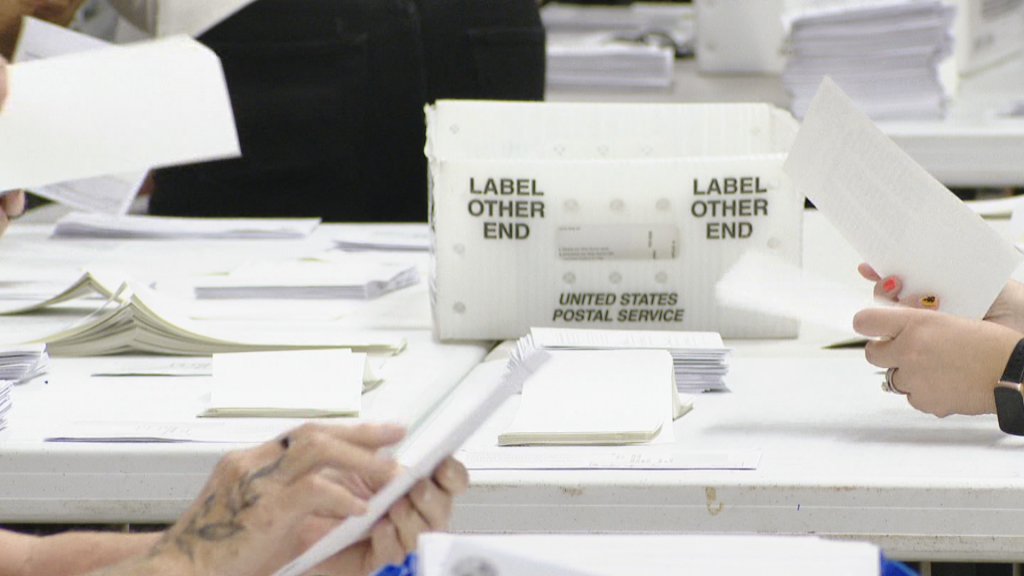
INDIANAPOLIS — Election night brought a surge of voters to Marion County and a shortage of people who help count their ballots.

“You had a limited number of people who were available at 9 am on a Tuesday to come volunteer their time,” Marion County Election Spokesperson Dan Goldblatt said. “A lot of people are working the polls if they are able to. A lot of people are working their day jobs. It’s just a matter of getting people when they are available.”

Goldblatt said 41% of registered voters cast ballots. More than 88,000 people voted early in person, followed by another 160,000 on Election Day.

After the Election Board made a last-minute plea for more poll workers, Goldblatt said residents stepped up to help.

“We had hundreds of people,” he said. “We knocked it out in probably record time for the amount of ballots. We’ve never had that many ballots before. We were expecting to be done midnight, 1 to 2 am and all our volunteers were done around 830pm.”

Still, Goldblatt said Wednesday the counting wasn’t over and that only 99% of the votes had been processed. Although on the city’s official website, it said 100% of the votes were counted.

“The candidates have been able to declare themselves or opponents winners, as we pretty much have 99 percent counted,” Goldblatt said. “Mathematically, they know how the races are going to go. These last few thousand votes, though. These are just as important as every other vote.”

As for the other 1% of the ballots, he said they can get difficult.

“Sometimes these are ballots that were damaged in the mail,” Goldblatt said. “Maybe have a smudge on it and couldn’t be read by the machine or possibly occasionally the machine’s even damaged the ballots. That doesn’t make them unreadable. That doesn’t mean you can’t count them. We just have to print them, and it takes a while because a bipartisan team is going through that ballot.”

Goldblatt said these aren’t provisional ballots or ones where voters’ eligibility still has yet to be verified. The state has 10 days from the election to certify its results.

Goldblatt said they welcome additional volunteers as they prep for the next election in May.

Indiana execution among 3 scheduled for the same day in US

Convicted child killer Jeffery Weisheit to be executed in the morning

An Indiana man who admitted killing two children in a house fire was set to be executed in the first of three lethal injections scheduled for Thursday in the U.S.

Florida and Alabama were also set to carry out executions, which would mark the second time this year that three people would be put to death on the same day. The death penalty has faced renewed scrutiny following Tennessee’s failed execution of Christa Pike, although courts have rejected efforts to halt other executions since she survived two lethal doses of pentobarbital last month.

It will be Florida’s 19th execution this year under Republican Gov. Ron DeSantis — matching a record set by the state in 2025 — but the first this year in Indiana, where the death penalty is not as common.

Lawyers had asked for life sentence for Indiana man

Jeffrey Weisheit was convicted of setting a fire that killed his girlfriend’s two children, ages 8 and 5, at a home in the Evansville area in 2010, murders apparently related to the couple’s deteriorating relationship.

Lawyers wanted Republican Gov. Mike Braun to allow Weisheit, 50, to undergo brain scans in an effort to reinforce their argument that he has a history of head injuries and mental health problems. Braun declined, and he also turned down a request to reduce the sentence to life in prison.

Weisheit’s latest objection centered on the state’s planned use of lethal drugs purchased from a pharmacy that is facing a disciplinary hearing next week at the Indiana Pharmacy Board. The Indiana Department of Correction said it’s confident “in our ability to humanely carry out” the execution.

Florida on the verge of tying last year’s execution record

In Florida, Jesse Guardado confessed and quickly pleaded guilty to fatally stabbing a 75-year-old woman inside her Walton County home in 2004 before stealing her jewelry box, $80 and other valuables to support his drug habit. She had helped him get a job and housing.

A federal appeals court in 2024 said Guardado, now 64, had received a “full and fair” hearing during the death penalty phase of his case.

Florida has carried out more than half the 32 total executions in the U.S. so far this year. DeSantis, who leaves office in January, has said his goal is to bring justice to families who have waited decades for the death sentences to be carried out.

Alabama man convicted for killings when he was 19

Michael Taylor, 54, faces execution in Alabama, 35 years after fatally beating an older couple with a metal bar during a robbery in their Gadsden home. Police arrested the 19-year-old with the victims’ Cadillac, an hour away in Birmingham. The execution would be the state’s third this year.

Death penalty opponents had urged Republican Gov. Kay Ivey to reduce Taylor’s sentence to life in prison, noting his age and immaturity at the time of the killings. She declined.

“If the state kills Michael, it is not the 19-year-old who made the worst mistake of his life who it kills. But the mature, well-respected, God-fearing man sitting in that cell today,” said Esther Brown of Project Hope to Abolish the Death Penalty.

The state plans to execute Taylor by lethal injection after a judge declared a nitrogen gas method unconstitutional. His attorneys objected to the last-minute switch to lethal injection since he selected nitrogen gas as his method several years ago, but a judge ruled against Taylor.

Fischer reported from Fort Lauderdale, Florida and Chandler from Montgomery, Alabama. Associated Press reporter Ed White contributed from Detroit.

Ford wins in Indiana’s 5th District; Spartz scolds Hamilton County voters

Election results Wednesday morning

The above video features WISH-TV’s coverage of all of the major election results statewide.

U.S. Rep. Victoria Spartz, who lost her congressional seat, admonished Hamilton County voters after Tuesday’s election.

The Republican issued a statement early Wednesday: “This election is a wake-up call for Indiana. An influx of liberal voters has turned Hamilton County, once one of the top 20 most conservative counties in the country, blue – with not enough rural Indiana voters to offset those numbers. Democrats significantly outspent us and ran a very dishonest campaign, but I urge my supporters not to get discouraged. We may not win every battle, but WE WILL WIN THE WAR!”

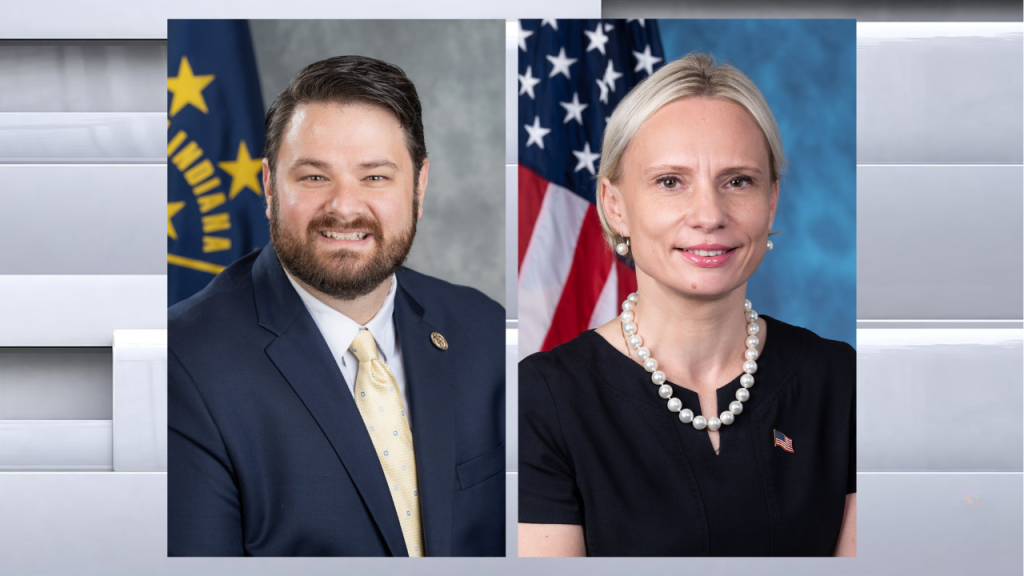
Shortly after 1 a.m. Wednesday, The Associated Press projected Spartz, 48, would lose her seat to Indiana state Sen. J.D. Ford, 43. He won his state Senate seat in 2018, becoming the first openly LGBTQ+ member of the General Assembly.

In a statement, Ford declared victory shortly after 10 p.m. “This victory belongs to every person who has felt ignored by Washington, every family struggling to make ends meet and every voter who refused to believe that change was impossible,” Ford said in part of the statement. “Hoosiers are working harder, paying more and getting less in return.”

With 99% of votes counted at 1:03 a.m. Wednesday, Ford led with 134,476 votes over Spartz’ 125,851, AP reported.

Spartz was the first Ukrainian-born member of the U.S. Congress, having assumed office in 2021.

Both candidates called for more government accountability. Ford’s platform also included affordability and access to health care, while Spartz called for reducing federal spending and debt and changing immigration policies.

Last week, the Cook Political Report changed its rating of Indiana’s 5th Congressional District from “Likely R” to “Lean R.” Earlier this year, the report rated Spartz’s seat “Solid R.”

Major cities in the 5th Congressional District include Anderson, Carmel, Fishers, Fortville, Frankfort, Greentown, Hartford City, Kokomo, part of Lawrence, Lebanon, Logansport, Marion, McCordsville, Muncie, Noblesville, Pendleton, Peru, Sheridan, Tipton, Wabash, Westfield, Whitestown and Zionsville.

The last Democrat to represent Indiana’s 5th District, which then covered Hamilton County and surrounding northern Indianapolis suburbs, was Jim Jontz, who served in the U.S. House of Representatives from 1987 to 1993.

Indiana has nine congressional districts. Six Republican incumbents and two Democratic incumbents were projected to win reelection.

In the 1st District, Democrat Rep. Frank Mrvan was projected to win reelection in the northwest Indiana district. He had about 63% of the vote.

Republican Rep. Marlin Stutzman was projected to win reelection to the 3rd District, with about 54% of the vote. The northeast Indiana district includes Fort Wayne, Angola, Auburn, Huntington, Kendallville and New Haven.

In the 4th District, Republican Rep. Jim Baird was projected to win reelection, with about 54% of the vote. Cities in the district include Lafayette, West Lafayette, Plainfield, Zionsville, Brownsburg, Avon, Lebanon, Crawfordsville, Greencastle, Martinsville, Mooresville, Frankfort and Danville.

Republican Rep. Jefferson Shreve was projected to be reelected to the 6th District seat. The district includes parts of south Indianapolis, as well as the cities of Greenwood, Columbus, Richmond, Franklin, Greenfield, Shelbyville, New Castle, Beech Grove and Connersville. Shreve won about 56% of the vote.

Democrat Rep. André Carson was projected to win reelection to the 7th District, which covers Indianapolis, with about 70% of the vote.

Republican Rep. Mark Messmer was projected to win reelection to the 8th District with about 55% of the vote. The district includes the cities of Evansville, Terre Haute, Vincennes, Jasper, Princeton and Washington.

In the 9th District, Republican Rep. Erin Houchin was projected to win reelection, with 54% of the vote. The district includes Bloomington, part of Franklin, part of Greenwood, Jeffersonville, New Albany, Paoli, and Salem. She said in a statement that she hopes to continue to hold government accountable, lower the cost of healthcare, secure elections, and strengthen communities.

In December, the Republican supermajority in the Indiana Senate voted down a proposal to redraw congressional district boundaries ahead of Tuesday’s midterm election, perturbing Gov. Mike Braun and President Donald Trump.

Braun extends Indiana gas tax suspension through Dec. 4

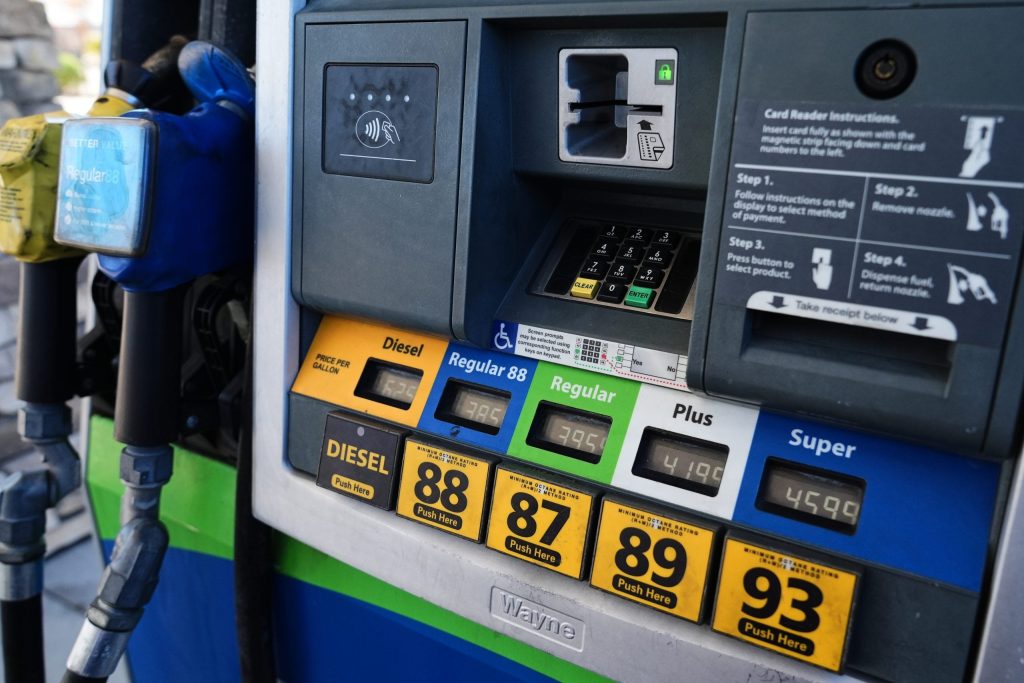
INDIANAPOLIS — Indiana drivers will continue receiving a break at the gas pump through Dec. 4 after Gov. Mike Braun signed executive orders extending the suspension of the state’s gasoline excise and gasoline usage taxes.

The extension takes effect Nov. 5 and applies to all 92 counties. The suspension was originally implemented as part of a statewide energy emergency declared Aug. 7.

Braun said the extension is intended to help Hoosier families and farmers manage transportation costs.

“Affordability is my top priority, and I’m using every tool available to help Hoosier families and farmers save money at the pump,” Braun said.

A second executive order continues the suspension of certain fuel restrictions for Indiana farmers and timber harvesters, allowing them to use dyed diesel in qualifying highway vehicles involved in agricultural and timber harvesting operations.

The governor’s office said the state will use existing reserves to reimburse local units of government and ensure the Indiana Department of Transportation can continue its fiscal year 2027 projects and maintenance without interruption.

Braun first suspended the fuel taxes in April. The latest orders extend the relief for another 30 days, through Dec. 4.

Bayh leads Engling in secretary of state race with three-fourths of votes counted

Democrat Beau Bayh led Republican Max Engling as vote counting continued Tuesday in the race for Indiana secretary of state.

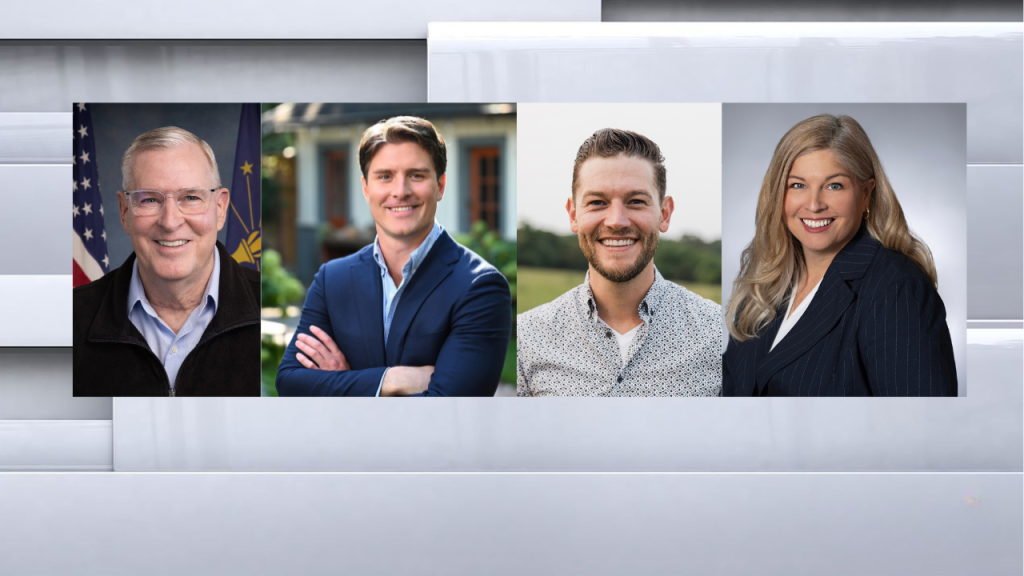
The four candidates were Max Engling, a Republican; Beau Bayh, a Democrat; Lauri Shillings, a Libertarian; and Greg Ballard, a Lincoln Party candidate. The winner will serve as the state’s chief election officer.

With 82.9% of Indiana votes counted at 11 p.m., Bayh led with 853,231 votes. Engling had 754,234. Ballard and Shillings shared less than 6% of the remaining votes.

Early-voting and absentee ballots released short after polls closed in Hamilton County gave Bayh 48,619 votes. The next closest was Republican Max Engling with 25,351. Ballard had 3,726, and Shillings had 923.

In Allen County, the first results issued shortly after polls closed showed Bayh with 31,050; Engling, 16,361; Ballard, 1,178; and Shillings, 756.

Voters chose among four candidates for secretary of state, and vote counting was to begin Tuesday night.

Engling, 39, is a former congressional staffer who served under U.S. Sen. Jim Banks. He secured the Republican nomination at the June convention after challenging and defeating incumbent Republican Secretary of State Diego Morales.

Bayh, 30, is a member of a prominent Indiana political dynasty. He is the son of former Indiana Gov. and former U.S. Sen. Evan Bayh, and the grandson of former U.S. Sen. Birch Bayh.

Ballard, 71, is a Marine Corps veteran and the former Republican mayor of Indianapolis. He is running under the newly formed Lincoln Party banner.

Shillings, 55, works as a creative director at the University of Indianapolis and advanced to the ballot after receiving the Libertarian Party nomination in March.

Other Indiana state races

Indiana state comptroller (formerly auditor): Republican incumbent Elise Nieshalla faced Democrat Jessica Bailey and Libertarian John Schick.

Indiana state treasurer: Republican incumbent Daniel Elliott faced Coumba Kebe.

Elliott said Tuesday night while watching election results, “Well, I think that what we can see is there are some things we’ve got to work on. As a Republican Party, there are some things we’ve got to work on that matter to Hoosiers.”

Indiana ballot questions

Public Question 1 would amend the state’s Constitution, which currently guarantees the right to bail in most cases, with exceptions for murder and treason when the evidence is strong. If voters approve the question, those exceptions would expand to include other crimes if prosecutors can show that there is strong evidence against a defendant and prove that the defendant poses a risk to public safety.

Public Question 2 would allow city and town judges to reside in either the county where the court is located or the closest bordering county. If voters do not approve it, city and town court judges would still be required to live in the city or town where the court is located.

Marion County calls for more poll workers to count votes

INDIANAPOLIS — The Marion County Election Board announced on Facebook the county “urgently” needs additional workers to help count ballots.

he post said without enough counters, the board may not have election results by the end of election night.

Workers would be paid $15 per hour and must be registered Indiana voters.

Anyone available to help should go to the election operations center at 51 Koweba Ln. in Indianapolis and ask for Camille Drake.

Those seeking payment for the work need to bring a valid driver’s license and a social security card. Volunteers only need to be an ID that meets Indiana voting requirements.

The election board has not said how many workers they need.

Three Hoosier Lottery tickets win $50,000 prizes in Monday’s Powerball drawings

INDIANAPOLIS — Three Hoosier Lottery tickets won $50,000 prizes in Monday night’s Powerball and Double Play drawings.

Two winning Powerball tickets matched four of the five numbers and the Powerball. They were purchased at:

  • Speedway #8031, 211 S. State Road 135 in Bargersville.
  • Casey’s #4033, 1415 W. South St. in Lebanon.

A third ticket won $50,000 in the Powerball Double Play drawing. It was purchased at Strack & Van Til #8782, 6046 Central Ave. in Portage.

The winning Powerball numbers for Monday, Nov. 2, were 7-23-29-64-66, with a Powerball of 23.

The Double Play numbers were 20-23-24-33-61, with a Powerball of 1.

Players can check their tickets using the free Hoosier Lottery mobile app.

The lottery advises winners to keep their tickets in a secure place, consider meeting with a financial advisor and contact customer service at 1-800-955-6886 for instructions on claiming their prizes.

Indiana had the first Powerball jackpot winner in 1992 and leads the nation with 40 jackpot wins. Since its first drawing that year, Powerball has raised $38 billion for good causes supported by lotteries nationwide.

The Powerball jackpot for Wednesday, Nov. 4, is estimated at $835 million. It would be the 10th-largest jackpot in the game’s history.

Categories