
PAOLI, Ind.– A southern Indiana mother is raising concerns about a new assessment process the state is using for people with disabilities.
Earlier this year, the Indiana Family and Social Services Administration (FSSA) launched a new assessment procedure for people receiving a Medicaid waiver.

“It was awful”: Mom concerned about son’s interview
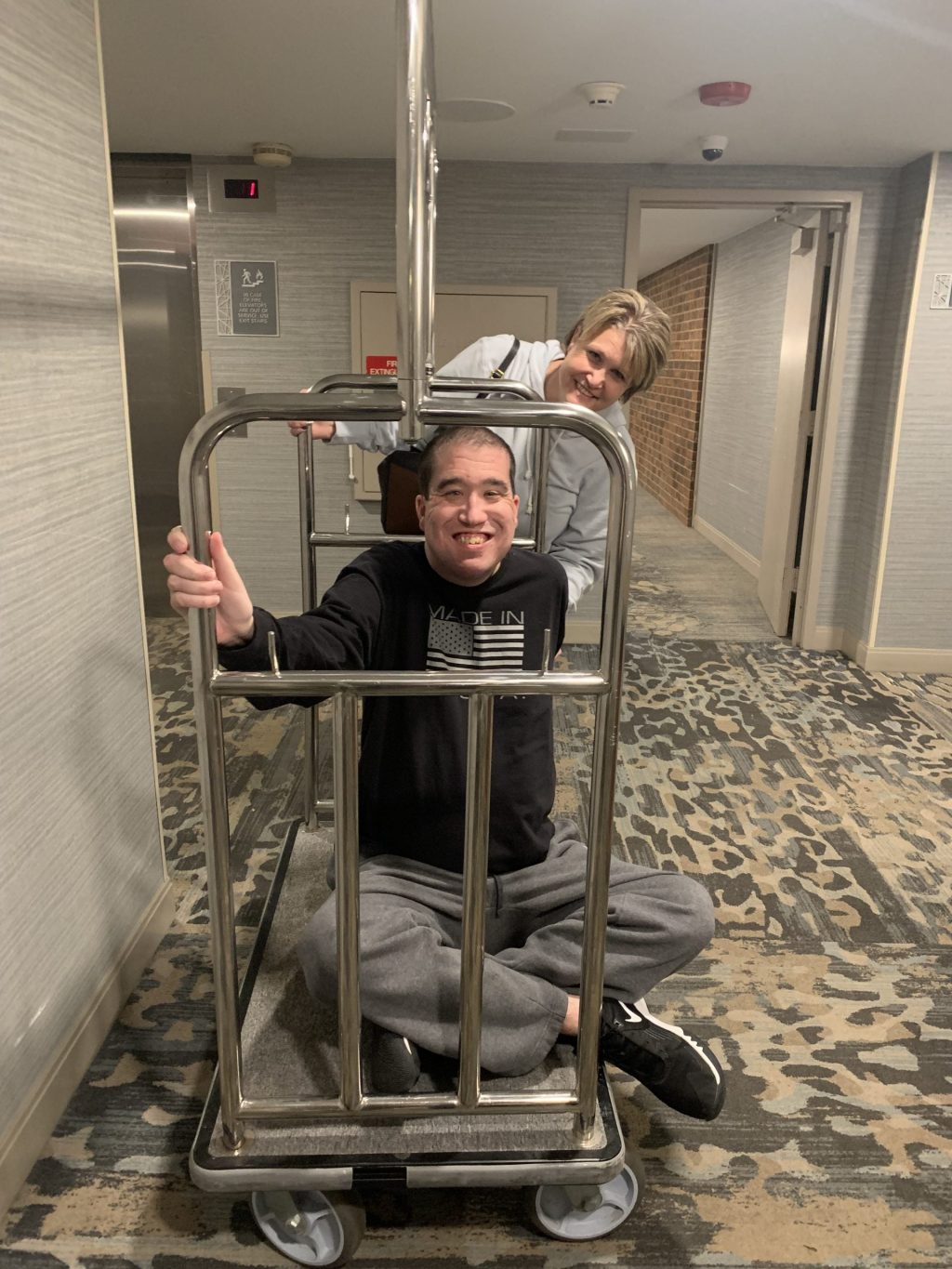
Angie Brookshire lives in Loogootee, Indiana with her son Cameron.
“He’s got a ton of health problems and autism,” said Brookshire.
For 10 years, Cameron has relied on a Medicaid waiver which allows him to attend a day program at the First Chance Center in Paoli.
“He has goals set up that they work on, and he gets to spend time with people rather than, you know, being stuck at home all the time,” said Brookshire. “ It’s something that he looks forward to every single day of his life.”

Last month, an assessor with FSSA came to their home to make sure Cameron still qualifies for the Medicaid waiver.
The assessment looks at six life areas:
- Self-Care
- Understanding and Use of Language
- Learning
- Mobility
- Self-Direction
- Capacity for Independent Living
“It was a long 2 hours and 20 minutes,” said Brookshire.
Brookshire says many of the questions were way too complicated for Cameron, who functions at the level of a 5-year-old child.

Brookshire said one example was when the FSSA assessor asked Cameron if he’s a positive influence in his community.
“Cameron nodded yes, and I looked at the case manager and I said, that’s not a yes for him,” said Brookshire. “He does not know what that means, and I said, ‘Cameron, what does community mean?’ And he didn’t know. And I said, ‘What’s positive?’ And he didn’t know. And I said, ‘So don’t put down a yes for him .’”
Other examples of questions, according to Brookshire include:
- What is your primary goal in life?
- Name your closest confidants.
- Do you have little to no interest or pleasure in things you normally do in the last 3 days?
- In the last 3 days have you felt anxious, restless , uneasy, or depressed?
“As the interview kept going on, she would ask him questions, and then she would turn and ask me to answer for him,” said Brookshire.
Brookshire is a teacher at a special education co-op and tests students as part of her job.
She says FSSA’s assessment format concerned her.
“It was awful,” said Brookshire. “I feel like this assessment is not valid. it’s taking a yes or no answer for something that’s so much deeper.”
Brookshire says at one point the FSSA assessor gave her the computer to fill out Cameron’s medical information.
“It all just alarmed me so much, and so I stepped out of my comfort zone on Facebook, and then that really blew up,” said Brookshire.
Angie Brookshire’s Facebook post about her experience with the state’s new assessment process has hundreds of comments and it’s been shared more than 800 times.

“Stupid waste of State resources. Especially when the State has doctors statements confirming the LIFE LONG DISABILITY!!” wrote one commenter.
Angie Brookshire wants to know what FSSA’s goal is with the new assessments.
“What’s most concerning to me is I feel like it can set up people to fail,” said Brookshire. “You might want to you know trim the fat, but at what the expense of what?”
Brookshire says Cameron was approved for the Medicaid waiver, but she’s concerned about people who were not so fortunate.
FSSA says new process it not about stopping fraud or saving money
Indiana’s I-Team spoke with two officials at FSSA: Kelly Mitchell, the director for FSSA’s Division of Disability Aging and Rehabilitative Services, and Holly Wimsatt, director of FSSA’s Bureau of Disability Services.

“This is most definitively not an action to save money, this truly is,” said Mitchell. “We want to consistently and accurately identify individuals’ needs. We want to ensure that we’re getting the right service to the right folks at the right time. That’s our mission.”
FSSA points out the assessment process includes guided interviews, as well as a review of records and assessor observations.
All three components inform the assessor’s responses documented in the assessment tool.
FSSA recently re-trained staff after an internal review found some problems.
“We had reports of issues where the individual may not have been included in an interview, or that a guardian may not,” said Mitchell. “It wasn’t always clear to us whether that person had or had not been there. I think there were times maybe questions were just read versus rather than a guided process as it was initially trained and instructed.”
FSSA says assessors are now trained to verify information with other individuals who may know the person if there are inconsistencies encountered or questions that remain after the interview, record review, and observations of the individual.
“The assessment process is really looking at the individual and their situation from a holistic perspective,” said Wimsatt. “That information informs a decision on level of care eligibility, but it is also used heavily in what might be called service planning or person-centered planning. What things does that person need to be connected with?”
FSSA emphasizes that the new assessments are not about rooting out fraud.
“The purpose of this is io ensure that we are appropriately identifying individuals’ needs,” said Mitchell.
FSSA says 96.5% of applicants meet the criteria, which leaves a denial rate of 3.5%.
This summer, Indiana’s I-Team reported that the denial rate was 6%, prompting concern from state lawmakers.
Under the old assessment system, FSSA’s denial rate for Medicaid waivers was .02%.
FSSA points out that 500 people who were in active appeal are being scheduled for reassessments.
“We’ll be doing new assessments,” said Mitchell.
The agency also says it has added 800 slots of the family support waiver.
“The capacity has grown,” said Mitchell.
FSSA also points out that families can appeal.
“Those services don’t terminate immediately,” said Mitchell. “At a minimum, the individual has 90 days, and then, there’s an appeal process. So no one is just removed from their active services and supports upon that determination.”
FSSA also says it will look into Angie Brookshire’s concerns about her son’s interview.
Arc of Indiana files records request
The Arc of Indiana, an advocacy organization for people with disabilities, has filed a public records request with FSSA to learn more about the new assessment process.
Read the Public Records Request
“We have raised concerns about inconsistent assessments, inadequate training, changes to the process, and poor communication with individuals and families,” said Kim Dodson, CEO of The Arc of Indiana. “We appreciate that FSSA is responding to some of those concerns. Now we need to make sure the problems are fully corrected and understand how the information collected through InterRAI is actually being used to determine eligibility.”
The Arc is seeking greater transparency about the process.
“People with intellectual and developmental disabilities have a broad range of abilities and support needs,” Dodson said. “We need to understand what assessment information matters, how it is weighted, what criteria or thresholds are used, and how the methodology was developed and tested. We must have confidence that the process accurately identifies everyone who meets Indiana’s level-of-care requirements, not only people with the most significant or readily apparent disabilities.”
The Arc’s public records request seeks information about that decision-making methodology, along with records concerning assessment training, quality assurance, implementation problems, and outcomes.
About The Author

You may also like
-
IMPD: Accidental shooting on east side kills one, injures another
-
19-year-old charged in shooting, attempted robbery of 17-year-old
-
Yes, Microsoft is down. Here’s what else got hit in Thursday’s outage
-
Jury convicts man in scheme that cost Indiana more than $60 million
-
Nvidia CEO Jensen Huang resigns after his affair raises national security concerns